
Multichannel Advertising
How Companies Can Achieve More with Cross-Platform Campaigns
Multichannel advertising turns this reality into a strategy. Companies that coordinate their advertising channels guide potential buyers through the entire decision-making process, rather than focusing on a single moment. This article explains how such a strategy is structured, what the challenges are, and how to choose the right channels.


In this article, you will learn:
What does "multichannel advertising" mean?
Why Multichannel Advertising Is Important for Businesses
Push and Pull: The Two Basic Mechanisms in Multichannel Advertising
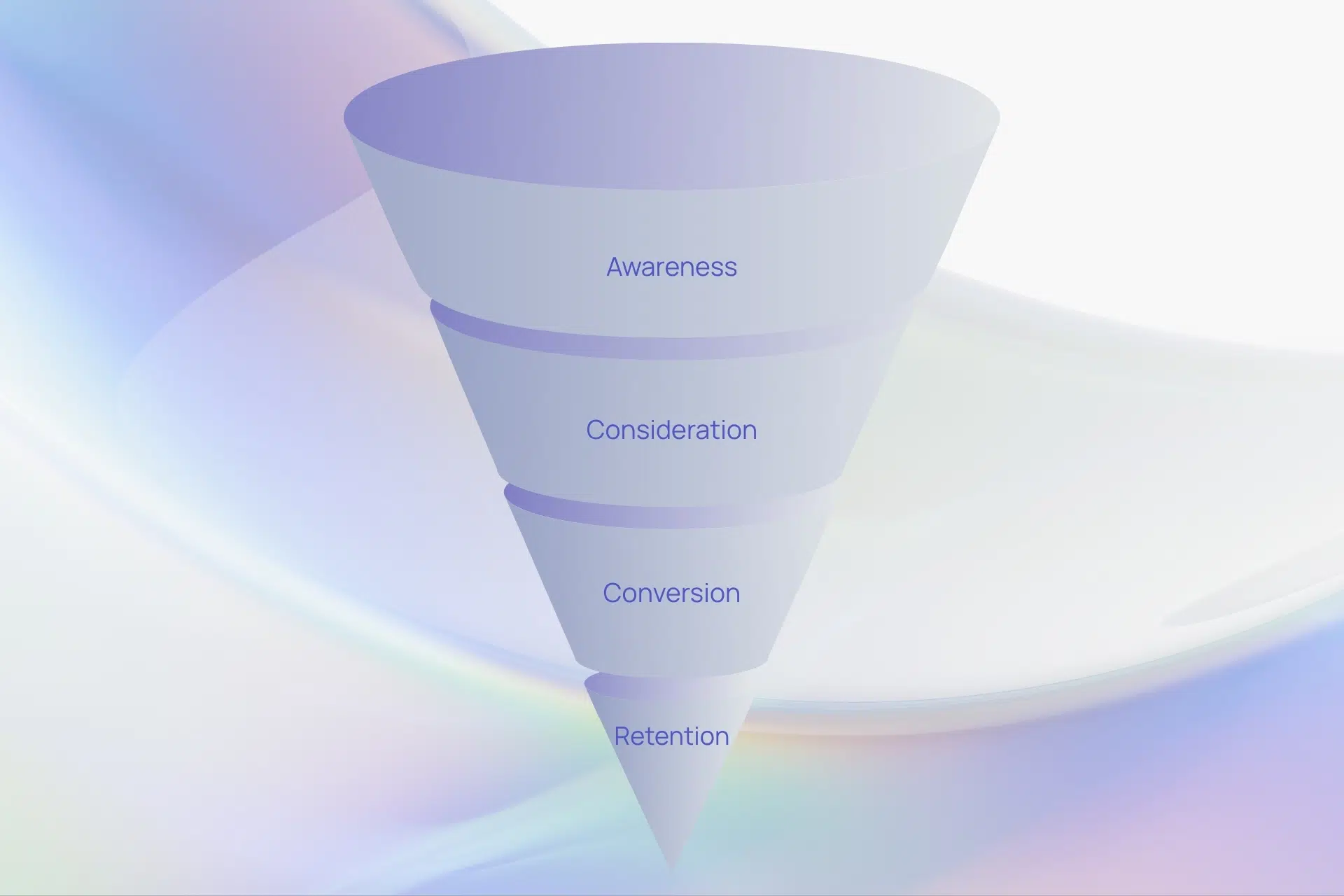
The Funnel as the Foundation of a Multichannel Strategy
Which channel is right for which company?
The Challenges of Multichannel Advertising
What does "multichannel advertising" mean?
Multichannel advertising refers to the coordinated use of multiple advertising channels within a single campaign strategy. Instead of concentrating the entire budget on a single platform, channels such as Google, Meta, LinkedIn, or TikTok are combined to reach target audiences at different stages of their purchasing decision.
The goal isn't to be everywhere. It's about using the right channels at the right time with the right message. Those who understand this difference make better decisions about budget allocation and channel selection.
Why Multichannel Advertising Is Important for Businesses
Multichannel advertising increases the number of relevant touchpoints with potential buyers, thereby reflecting how purchasing decisions actually come about: across multiple interactions, platforms, and time periods. A single channel covers only a small part of this customer journey. By combining multiple channels, businesses can be visible at more decision-making moments and gain greater independence from individual platforms.
Behind this logic lies a simple connection: Target audiences divide their attention among multiple platforms, and each platform serves a different purpose. The person scrolling through Instagram in the evening is the same person searching for a solution on Google the next morning. A company that captures only one of these moments may be leaving the other to the competition.
Then there’s the issue of resilience. Anyone who concentrates all their advertising efforts on a single platform is vulnerable to algorithm changes, rising click prices, or a loss of reach on that very platform. A diversified strategy reduces this risk and creates flexibility to shift budgets to where they’ll have the greatest impact right now.
Push and Pull: The Two Basic Mechanisms in Multichannel Advertising
Pull Marketing: Meeting Existing Demand
Pull channels reach people who are actively looking for something. The best-known form is search campaigns on Google or Microsoft, but the range of search queries is broad: transactional queries like “buy office chair” signal a concrete intent to purchase, while informational queries like “back pain at the office—what to do” mark the beginning of someone grappling with a problem. Both can be addressed with search ads, but they require different messages and possibly different landing pages.
The strength of pull lies in the fact that the need has already been articulated and ads can respond precisely to it. The limitation lies in volume: Pull campaigns can only tap into the demand that already exists. Anyone offering a product that requires explanation or is new, or operating in a market with low search volume, will quickly reach the limits of pull alone.
Push Marketing: Generating New Demand
Push channels reach people who aren’t actively searching. The ads appear in the social feed, before a YouTube video, or as a banner on a website. Targeting is based on interests, behavior, and demographic characteristics rather than a search query. Social platforms such as Meta, LinkedIn, TikTok, and Pinterest primarily operate on this principle, each reaching a different audience.
The Google Network also offers a range of push formats: Display campaigns place banners on websites and apps; video campaigns on YouTube are among the most effective formats for building brand awareness; and demand generation campaigns serve visual ads.
It’s important to note that push notifications aren’t limited to reaching out to strangers. Through retargeting, push formats also reach people who have already had contact with the brand, thereby taking on tasks related to closing sales—such as reaching out again to users who abandoned their shopping carts with a specific offer.
How Push and Pull Complement Each Other
This synergy can be illustrated with a scenario: A company that sells ergonomic office furniture runs TikTok campaigns showing the product in everyday work settings. A user sees the video, doesn’t click on it, but remembers the brand. Two weeks later, with a sore back after long days at work, she searches Google for “ergonomic office chair review.” The company’s search ad appears; since the brand name is already familiar to her, she’s more likely to click, and a conversion follows.
Both mechanisms contributed to this purchase: “Push” sparked the demand, and “Pull” closed the deal. In addition, there are measurable synergies. “Push” campaigns build retargeting audiences and increase search volume for the brand itself: People who are already familiar with a brand are more likely to actively search for it, which increases the reach of “Pull” campaigns and can improve their conversion rates.
The Funnel as the Foundation of a Multichannel Strategy
Awareness: Building Visibility Among New Target Audiences
The awareness phase is about reaching people who are not yet familiar with the company or who are not yet aware that they have a need for a particular service or product.
This phase is dominated by high-reach channels with strong video capabilities: TikTok, Meta awareness campaigns, YouTube, and display networks. The primary goal of this phase is not direct conversion, but brand awareness. At the same time, this phase builds the data foundation for later phases, as the users reached become part of the retargeting audiences.
Consideration: Deepen Interest and Build Trust
Conversion: Generating Sales
Retention: Reaching Out to Existing Customers Again
However, it’s important to always keep in mind that the funnel is a planning model, not a universal representation of reality. Actual customer journeys rarely follow a linear path; people jump between stages, do more research, abandon the process, and return weeks later. Nevertheless, the model remains valuable as a structural framework for defining roles, goals, and metrics for individual campaigns.
One way to address this complexity from a technical standpoint is through Performance Max within the Google Network: This campaign type automatically runs across all Google placements—from Search to YouTube and Display—thereby guiding users through multiple funnel stages within a single campaign. The trade-off for this automation is less manual control over placement and delivery, which places correspondingly higher demands on the quality of the conversion signals and creatives used.
Which channel is right for which company?
More channels don't automatically mean better results. Choosing the right platforms starts with an honest assessment:
Where does your target audience actually spend its time?
How long is your purchasing decision-making process?
What is the realistic budget, and how many resources are realistically available?
A few well-managed channels generally deliver better results than many channels that are run on budgets that are too small and without platform-specific creative content.
The target audience sets the direction here: A B2B company looking to reach decision-makers at medium-sized businesses will achieve different results on LinkedIn than on TikTok. A D2C fashion retailer with a young target audience, on the other hand, has a different starting point on TikTok and Instagram than it does with traditional display advertising, let alone ads on LinkedIn. Existing campaign data and an analysis of the target audience’s actual media usage provide the basis for this decision.
The product itself also influences the channel strategy. An impulse purchase of 20 euros benefits from a strong presence on high-reach platforms. A consulting service, on the other hand, involving a decision-making process that spans several months, requires consistent visibility over a longer period and channels that convey credibility and expertise. In B2B, there’s the added factor that the actual conversion often doesn’t occur until weeks after the first interaction with the brand, which places special demands on measurement.
In our consulting practice at Partner & Söhne criteria have proven effective for selecting the appropriate advertising channels:
Target audience: On which platforms is this audience actually active and reachable?
Product: Does the purchasing decision-making process align with how the channel operates?
Budget: Is it sufficient to provide each selected channel with enough data?
Resources: Can platform-specific creatives be produced and maintained?
Measurability: Can the channel's contribution to the overall result be tracked?
Do you have any questions?
The Challenges of Multichannel Advertising
Attribution: Which channel is credited with the conversion?
Attribution describes the process of assigning conversions to the touchpoints that contributed to a purchase decision. In a multichannel context, this quickly becomes complicated. Here’s an example: A person sees a TikTok ad but doesn’t click on it. Three days later, they search for the product on Google, click on a search ad, and make a purchase. Google Ads credits the conversion to itself based on last-click logic, and TikTok’s contribution remains invisible in the reporting.
It becomes even more confusing when multiple platforms claim credit for the same conversion. Meta can attribute it to itself via the view-through attribution window, while Google attributes it to the last click. Both attributions are technically correct according to their respective rules, but when added together, they exceed the actual number of sales. Tracking restrictions due to consent requirements and browser limitations further exacerbate this lack of clarity.
Reliable performance measurement therefore requires a nuanced analysis of the results and a clear understanding of the challenges and limitations of various attribution models. For larger budgets, incremental tests with control groups are the methodologically strongest approach because they show which conversions were actually driven by advertising. In any case, it remains important that channels should not be evaluated in isolation based on their own reporting metrics, but rather based on their contribution to the overall system.
Budget Allocation Across Channels
Consistency in Messaging and Creative Assets
Further contributions
Updates on our work and our perspectives on the issues that concern us.
We look forward to hearing from you.



Katrin, Maximilian, and Max-Raphael
Managing Partners