
Five steps to SSL encryption of your website

In contrast to previous practice, this measure no longer only affects credit card or other sensitive user data, but also everyday contact forms and newsletter registrations, which are frequently used on private and corporate websites.
We therefore strongly recommend - if you have not already done so - that you equip your website with an SSL certificate as soon as possible. In addition to being labeled as a "secure site", Google has been rewarding the use of the HTTPS protocol for some time now with a positive impact on search engine rankings. Encryption therefore not only offers you legal protection, but also protects you from unnecessary ranking losses.
How do I find out if my website is affected?
You can easily find out whether your website is already SSL-encrypted.
Check the URL
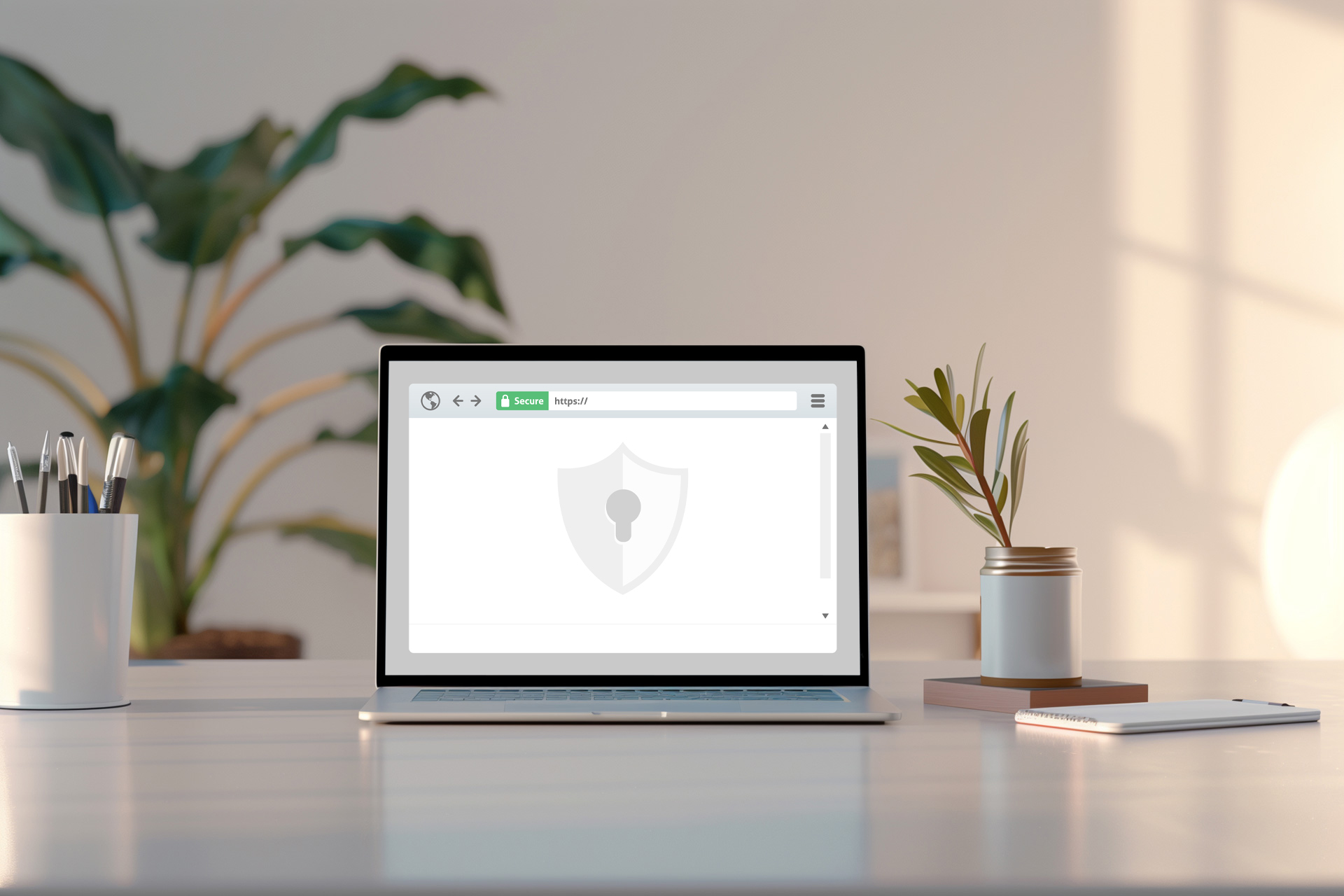
If your website can be accessed via "https", it is already encrypted. A green lock symbol in the browser also indicates that the connection is secure. In this case, you are already on the safe side and do not need to do anything else.
The use of HTTPS is essential for every website today. Google has clearly signaled that the security of user data is a top priority. If you don't switch your website to HTTPS, you risk both slipping in the search results and losing the trust of your users.
How does an SSL certificate work?
An SSL certificate encrypts the communication between the visitors to your website and the server on which your website is hosted. This encryption ensures that no third parties can intercept the data during transmission. Encryption is particularly important for websites with form fields, as names, email addresses or other contact details are usually requested here. In some cases, even passwords, bank details or insurance numbers are collected.
How do I obtain an SSL certificate?
You can obtain an SSL certificate from your current hosting provider. There are different levels of encryption methods. For companies that request particularly sensitive data (such as banks or insurance companies), we recommend an extended certificate that also displays the company name in the browser bar. However, such certificates are expensive to set up and maintain. For small and medium-sized companies, a simple "Let's Encrypt" certificate is usually sufficient. This offers solid encryption, does not require company verification and is easy to set up.
How much does an SSL certificate cost?
Let's Encrypt certificates are generally free of charge. The non-profit organization Let's Encrypt is committed to making the Internet more secure by providing free SSL/TLS certificates. There are no monthly fees and the certificates can be renewed automatically. Some hosting providers integrate the automatic setup of Let's Encrypt certificates as an additional service in their packages, but the certificate itself is free of charge.
How does the setup of an SSL certificate work?
The setup of an SSL certificate begins with the selection of the certificate type and the application via your hosting provider or a certificate provider. You then create a CSR (Certificate Signing Request) and submit it together with the application. After receiving the certificate, install it on your server and set up automatic HTTPS redirection to ensure that all HTTP requests are redirected to the secure HTTPS version of your website. Finally, you should check and regularly renew the installation and update your SSL settings to ensure the long-term security of your website.
Security and trust through SSL certificates
In today's digital world, the use of SSL certificates is indispensable. They protect the communication between your website and your visitors, prevent sensitive data from being tapped and improve the trustworthiness of your site. An SSL certificate not only ensures a secure connection, but also has a positive impact on your search engine ranking. Since Let's Encrypt offers free certificates, it is easier than ever to convert your website to HTTPS. Make sure you have the conversion process carried out professionally to avoid potential complications and ensure the long-term security of your website.
Further contributions
Updates on our work and our perspectives on the issues that concern us.
We look forward to hearing from you.



Katrin, Maximilian, and Max-Raphael
Managing Partners